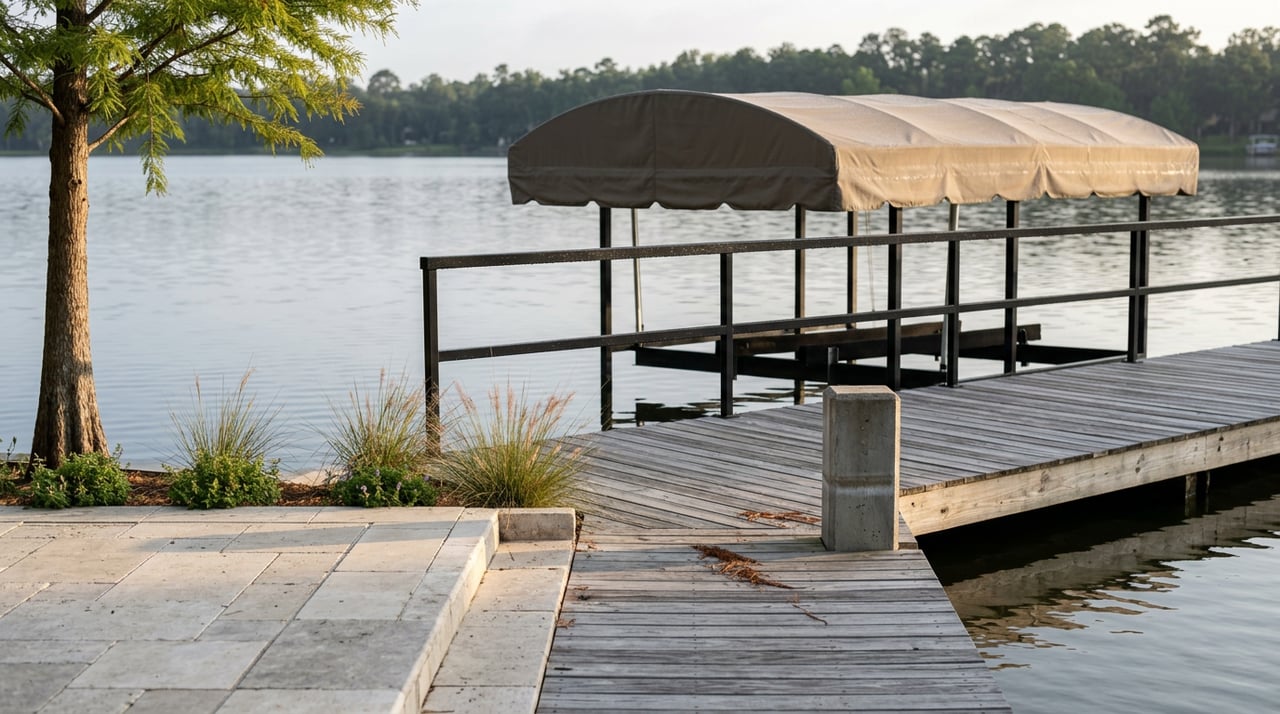
Walk any dock on the Lakeway side of Lake Travis right now and the water sits higher against the pilings than it has in years. As of August 9, 2026, Lake Travis is 99.2% full based on conservation storage and conservation capacity, holding close to the mark it reached in mid-July: full pool for the first time since 2019, after repeated rounds of heavy Hill Country rain sent floodwater down into the Highland Lakes. For seven years, the lake sat well below full, exposing sandbars, boat ramps left high and dry, and the low-water landmark locals call "Sometimes Island." That island is underwater again.
For a lot of Lakeway sellers and buyers, this reads as good news and nothing more. A dock that has been sitting over cracked mud for the better part of a decade is finally doing what a dock is supposed to do. But a full lake does something else too. It puts every dock's paperwork back under active use, and active use is exactly when gaps in that paperwork surface. A structure nobody has thought about since 2019 is suddenly load-bearing again, and the question a buyer needs answered is not "does the dock look fine," it is "whose approval is this dock actually operating under, and does that approval survive the sale."
Two agencies, two files, and neither one covers you completely
The instinct on a Lake Travis purchase is to ask whether the dock is permitted and treat a yes as the end of the conversation. In Lakeway, that single question hides two separate approvals that do not automatically travel together.
The first is the Lower Colorado River Authority, which governs the water itself. LCRA does not require a permit, registration or fees for residential docks of 1,500 square feet or less, though every dock on the lake, regardless of size, still has to meet the Safety Standards for Residential Docks on the Highland Lakes for dock flotation, lighting, access, anchoring and maximum distances from shore. A buyer who reads that 1,500-square-foot line and concludes their dock needs no paperwork at all has stopped reading one sentence too early.
The second approval sits with the city itself, and LCRA is direct about the fact that its own rules are a floor, not a ceiling. Dock owners have to follow every applicable rule, including city and HOA requirements, "regardless of which rules are more restrictive."
The City of Lakeway is one of the jurisdictions that standard applies to. Its own adopted fee schedule lists a private dock permit separately from LCRA's process, alongside every other structure requiring city sign-off.
| Structure type | City of Lakeway permit fee |
|---|---|
| Private dock | $250.00 |
| Nonresidential dock (min-max) | $250.00-$375.00 |
| Commercial dock or marina | $750.00 |
A dock that clears LCRA's 1,500-square-foot exemption can still owe the City of Lakeway its own application and its own $250 fee, reviewed by the city's Building and Development Services Department the same way a fence or a pool would be. According to the City of Lakeway, if the design needs a variance, that request goes to the city's seven-member Board of Adjustment, which decides appeals by a super majority of six votes.
What to check before a closing
The second gap matters even more once a sale is in motion. The paperwork trail from a permit issued years ago, back when the lake sat well below its current line, is not something a listing photo can show you.
This is where the timing of a full lake creates real friction. The structure itself has not changed, but the water underneath it has. Before a Lakeway waterfront closing, a buyer's due diligence should include the dock's LCRA permit number, the approval letter and any inspection record on file, and written confirmation from the seller that the permit holder of record matches the current owner.
Here is the order that keeps a waterfront closing from stalling in the last two weeks:
- Request the LCRA permit number and confirm it is current, not expired or superseded by a later modification.
- Ask whether the City of Lakeway issued its own separate dock permit, and request that file independent of the LCRA paperwork.
- Check the permit holder's name against the current deed.
- Ask for the most recent dock inspection, covering flotation, electrical, and structural condition above and below the waterline.
- Confirm whether the submerged land beneath the dock is privately owned or managed by LCRA, since that boundary is not always visible from the shoreline.
- If the dock predates current standards, ask whether it carries grandfathered status, and what happens if it needs to be rebuilt after storm damage or age.
None of this is exotic. It is the same due diligence any lakefront closing calls for. What has changed is the stakes of skipping it. A dock that sat unused and unreviewed through a low-water decade is now back in daily service, and an out-of-date or missing approval is far more likely to surface as a real problem this year than it was last year.
What the full lake actually does to the price conversation
Waterfront on Lake Travis has carried a durable premium through both wet years and dry ones, generally landing in the range of 40 to 80 percent over a comparable home without water access. That range has held up because it is built on scarcity of shoreline and the value of direct lake access, not on the water level in any given month.
What the water level does move is the conversation around the dock itself. A permitted, well-maintained dock in working water commands a real premium over a comparable property with no dock or an unverified one. A full lake makes that premium more visible, because the dock is doing its job again instead of sitting over exposed rock. It also raises the cost of getting the paperwork wrong. Buyers who wait until after closing to sort out a dock's status are negotiating from a much weaker position than buyers who confirm it before they sign.
A short FAQ
If my dock is under 1,500 square feet, do I need any permit at all? You may be exempt from LCRA's permit requirement, but the City of Lakeway's own dock permit and fee schedule applies regardless of size, and LCRA's safety standards for flotation, lighting, and anchoring still apply to every dock on the lake.
What if the dock was built years ago and nobody has touched the paperwork since? Ask for the original permit and any inspection history.
A full Lake Travis is a good thing for anyone who wants to live on it. It is also the moment when a dock's paperwork gets read more closely than it has been in years. If you are looking at a waterfront home in Lakeway and want a second set of eyes on the permit trail before you write an offer, Newton Residential Group is glad to walk through it with you.
This article is general information, not legal, tax or financial advice. Consult a qualified professional about your situation.